
Trauma Response Resolution (TRR)
A two-session neurological intervention for post-traumatic symptoms and phobias.
Helping you move from re-living the past to remembering it.
During traumatic experiences, parts of the brain are turned on while others are turned off.
In Post Traumatic Syndrome (PTS):
- Emotional expression becomes less regulated
- Sense of time and place becomes impaired
The Core Problem: Stuck in a Loop
Essentially, PTS refreshes the memory so the traumatic event keeps being re-experienced as if it were brand new — triggering flashbacks, nightmares, and an inability to return to calm.
TRR does not erase or alter memories. It re-codes them so they feel like any other past event, restoring your sense of control.
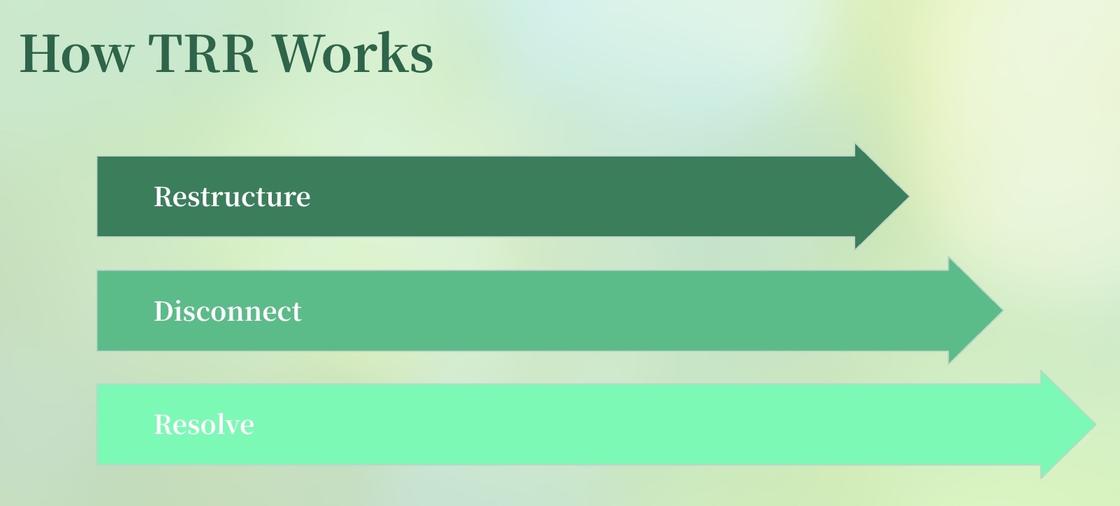
TRR will not change or eliminate any of your memories.
These memories simply get coded differently — becoming "just like any other memory."
You may still feel negative emotions tied to the event, but these will be normal, appropriate responses to a tough experience that is now in the past.
The Key Distinction
TRR changes how you perceive the memory — not the memory itself.
You gain the freedom to reflect without being consumed.
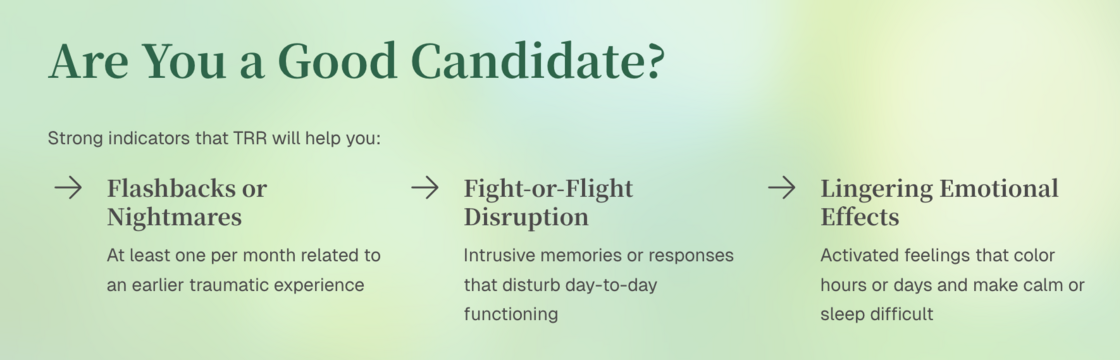
TRR is most powerful when the traumatic experience continues to induce feelings of fear, terror, and/or helplessness.
It can also help with phobias. Note: some complex grief cases do include PTS elements and may benefit.

Ready to Explore TRR?
If this resonates, the first step is simple.

Complete the Intake Form
Complete the intake form to help determine whether TRR is a good fit for you. Once received, you'll hear back within 24–48 hours to schedule a brief discovery call.
Client Feedback
“Receiving TRR helped me approach my trauma in a very different way. Instead of pushing into the story, the process allowed me to slow down and meet it from a calmer, more regulated place. There was space to notice and acknowledge my traumatic experience without becoming overwhelmed by it.
I have done decades of talk therapy and EMDR, and they have been very helpful in their own capacity, but this modality feels deeply rooted in truth and kindness. Kim held the work with a quiet steadiness and deep respect for my pace. That sense of safety allowed insight and understanding to arise naturally. I’m thankful for the experience and for a modality that honors the wisdom of the nervous system and respects the participant's dignity.
Since doing this work, I’ve noticed meaningful shifts in everyday life. Situations that might have triggered a strong reaction in the past simply don’t impact me the same way. I find myself staying calmer and more present, with an overall sense of being more at ease in my body. It feels like there is less space for fear and anxiety and more space for love and joy.”
- Michelle (remote client)
“I was drawn to TRR in hopes that it might help me with grief over the recent death of my spouse, and severe anxiety associated with medical testing. It’s been very impactful, especially because I anticipate having to undergo multiple imaging and other tests yearly for at least the next five years. Getting a handle on the horrible anxiety these tests generated was crucial. Before TRR, my mind would spiral and my nervous system went into overdrive. I was overcome with dread.
I still feel anxiety when going to the doctor or undergoing tests or labs, but it’s no longer overwhelming. I’m able to calm my nervous system so that the level of anxiety is manageable and my mind can process the situation without spiraling into worst case scenarios. I’m grateful for the relief I found through TRR. I can’t say I have zero anxiety, but it’s now manageable. And I can also accept that, although uncomfortable, some levels of anxiety are a normal reaction to any medical test or procedure.
The TRR process can be psychologically or emotionally uncomfortable at times, but well worth the effort. It can provide much needed relief from trauma.”
- Aymee (in-person client)
“TRR is a powerful tool to help minimize the long-term impact of a traumatic experience. My response to the protocol was subtle but profound, and I expect the positive impact will only continue to grow as I inevitably face other challenging experiences in my life, now feeling more resourced.
The most helpful aspect of TRR for me was putting myself in the position of being a 3rd party observer. Reimagining a different ending to the traumatic experience was also very helpful in realizing why the original experience was so traumatic and understanding that it could have been different with the right supports in place.
The biggest change I’ve noticed in myself is in how I view the experience we processed, and the reaction it triggers when I think about that event. Before doing TRR , thinking about this event not only caused a lot of anxiety, but whenever I faced a new situation that felt surprising, unexpected or out of my control, I became anxious and angry (my default response to fear). TRR helped me to remember that I have lots of supports in place in my life today that I didn’t have when I was younger. This awareness empowers me to better cope and get through challenging experiences that crop up. My initial response may still be anxiety/anger, but I am consistently able to quickly reframe my thinking about the situation instead of staying stuck in those unhelpful emotions.”
- Kirsten, remote client
"For me, TRR has been like putting on a new pair of glasses that restored my vision to 20/20! Kim’s guidance, understanding, patience, flexibility and encouragement were all very helpful aspects of the process for me. Before TRR, my unconscious reactions to traumatic memories had shut me down and disempowered me. Since completing my sessions, I feel a lightness (new air of freedom). There’s less dwelling on thoughts, more focus, and a renewed energy for lost passions. I have a better perspective on things and a greater ability to experience conflict without absorbing it.
I had to give up control in order to make the process successful, but there’s been peace in the afterwards. It was so interesting how going through the process with one traumatic memory brought a second one to the surface that was literally screaming for attention. The rescripting of that second memory is something I now carry in my mind’s eye and is very comforting.I feel like TRR has given me a new lease on life! I now feel freedom from something I had no idea had me locked up in chains. The TRR process itself is thought-provoking and involves a responsibility to move forward afterwards with a new awareness and accountability.”
- Anonymous, remote client